The Rhythm of the Abbey
Travel with Cecilia to beautiful Northern Colorado and meet the Benedictine sisters of the Abbey of St. Walburga. Immerse yourself in their life of contemplative prayer and tender care for the farmland upon which they are so blessed to live.
Transcript
Read the full transcriptAuto-generated · 1,806 words
I didn't grow up with a clear picture of what it meant to be a woman. Raised by my father with two brothers, I had to find pieces of womanhood in the women I worked with, read about, or admired. But slowly, I built a life of intention, crafted with purpose.
As a wife, mother, and business owner, I believe the choices we make, the way we build our homes, the clothes we wear, the meals we prepare, these all shape the lives we lead. It's about creating a space for joy and peace, not by accident, but by design.
We'll explore the stories of people who live life with intention. People who don't wait for life to be perfect, but embrace the beauty and meaning in their everyday choices. Because living a life of faith and beauty isn't something we wait for, it's something we create. And through these stories, we discover new ways to flourish, one intentional step at a time.
At the Abbey of St. Walburga, each day begins with intention. Before the sun rises, the air is filled with prayer, and the rhythm of the day starts in quiet devotion. Once the prayers are complete, the work begins. For the sisters, it's a daily offering. Every task, tending to the land, caring for the animals, is done with love and devotion.
Sister, what are we planning to do here today? So, we have to milk the cows. Sister Maria Wohlberger is going to milk, and then the cattle, the herd of cattle need hay bales fed, so I was thinking you and I could go feed the cows, kick them out of the hay bale area, and then feed them, and then we'll collect some eggs, feed the chickens, feed the pigs, and make sure everybody's got What they need, slide around in mud, pet Shakespeare.
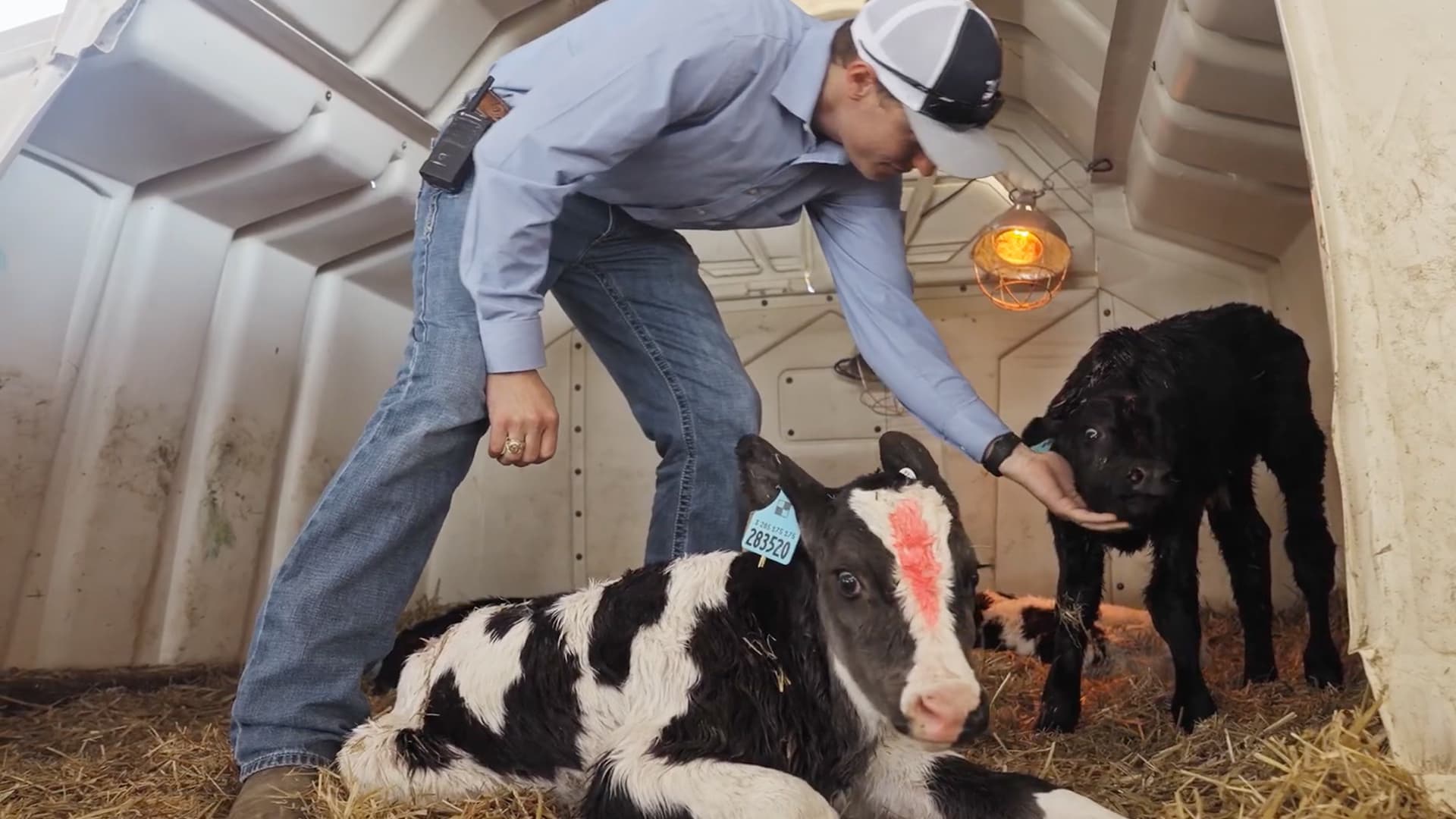
And do it all. The water buffalo gets milked, and these two dairy cows get milked. This is Buttercup looking at us. Oh, Buttercup. Mary Gold. This is Buttercup's calf. She just calved last week. Little baby Leo. Little baby Leo.
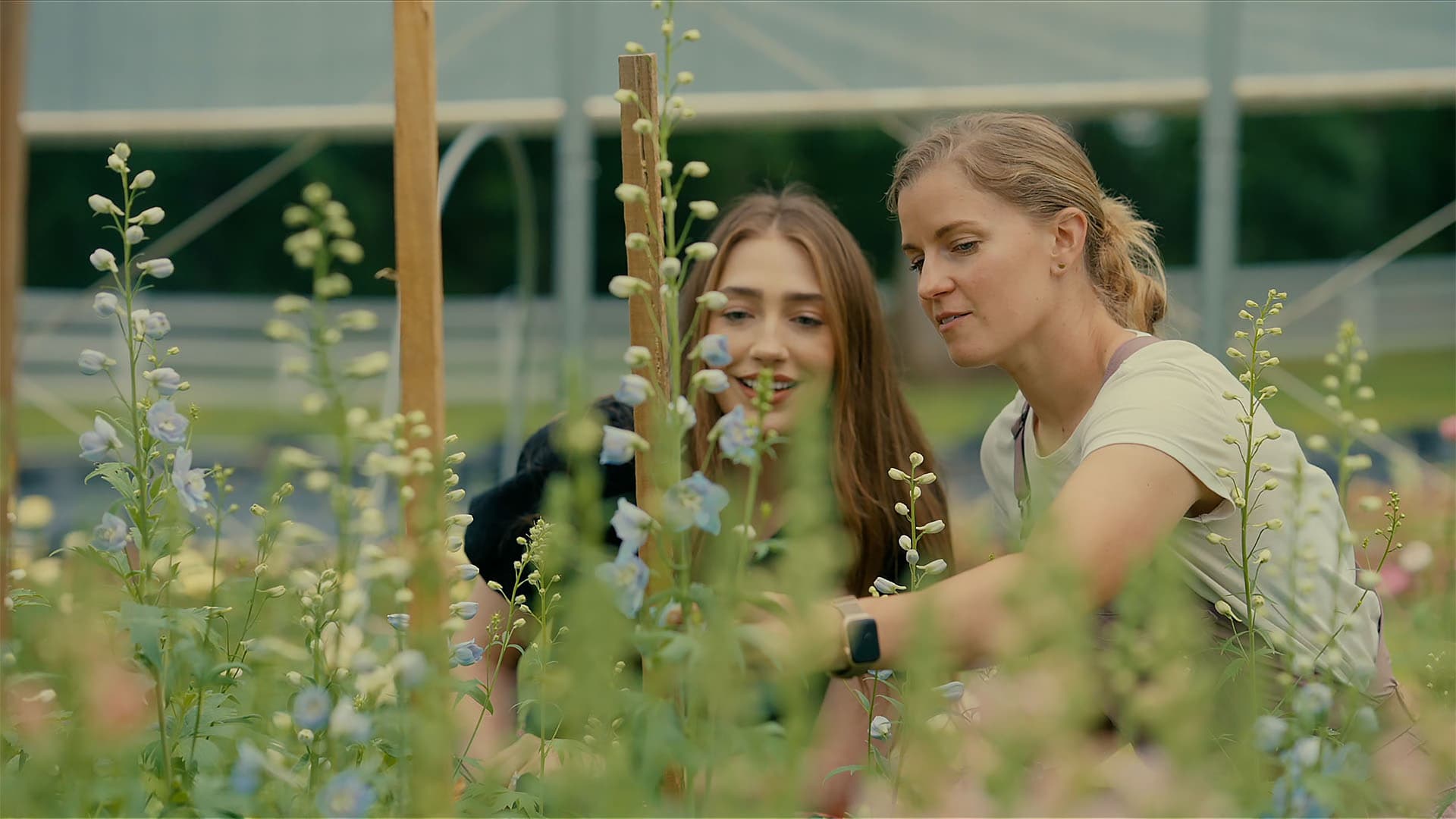
We have a couple of different reasons why we keep them locked in for April and May. It's good for the grass to have that early springtime to grow, otherwise it won't sometimes catch up if the cows graze it. The other thing is we have a lot of trouble with poisonous native wildflowers. Oh, wow. And so, especially larkspur, which is a beautiful, really common Colorado wildflower that we have a lot of on the property.
We're going to take our sticks and just kind of wave, okay, wave them. Sister, I think I'm going to, I think I'm going to hang back here. You're pretty good at that. They know what's coming. They know. Does it ever get monotonous doing this?
Like, you really appreciate when things are just, like, normal. Yeah. The tractor has a flat tire, or, you know, the hay fields are flooded, or fences are down, or whatever, and so then, you know, the other sisters and me work really great as a team together.
Now we've locked them out of here. That's so that we can feed hay bales without them getting out while we're opening gates. Okay. So, we'll go hop in the tractor and put some bales in. How have you found that your reliance on God kind of has altered since entering into this farm life? You know, like, I always remember something our superior said to me once, Mother Maria Michael. Something simple, like, oh, that'll teach you to pray. Like, you know, like, there's a goodness to just, like, crying out from the depth of, like, basic need.
Like, Lord, help! You know, it's like, that's very simple prayer, but it's very real. I'll send you whatever help you need, or, you know, sometimes, sometimes that doesn't, that doesn't mean that everything always goes perfect, but there's been times when it's really, like, I'm really not adequate to solve this problem, and God provides. Farming confronts you a lot with your own, like, limitation, because sometimes you're, you know, you're facing situations that you just can't control, and that is, I think, a good sort of reality check, too.
Like, I am only so powerful, and, you know, to have to face your limits can be... Can be really good for you. Yeah. Here, the land is treated with reverence. Each task is done with the same purpose, to give back and to nourish the earth as it nourishes them.
Sister, how long have you been at the Abbey? I entered the monastery in 1990. Okay. And has this been your main job, managing the farm? When I entered, our present abbess was the farm manager, but she had no help, so I...
I started helping her full-time pretty well. Never had any training in it, but just learned from her, and we just always have passed on the farming skills from one sister to another, and then I took over farming from Mother May Michael when she was elected abbess in 2003, and then I do now half office work, and Sister May Gertrude took over the farming. Okay, so you're passing it on. Yeah, yeah. It seems like... I think you know the personality of these animals really well.
Yes, especially the milk cows. You are so close to them all the time. We try to watch them as closely as possible. So, when they're calving, we sleep in the loft of the barn, and we can watch them at night. They're in a pen in the corner, and I can get up every two hours and check to see. You're camping out. Yeah, so we've made a nice little loft up here, and Sister Mary Gertrude and I camp out up there. You have a sleepover.
Yes, yes. So then you can see that you're the only nuns who get to camp. We don't have a tent, but it's a little better. It has facilities as well. Okay, so you take the milk, be pasteurized. We'll pasteurize it at the cheese hut, and then she'll either make extra into cheese, bunches of yogurt, and the sisters really love yogurt, and cheese, and then if there's any extra, it goes to the pigs.
There's more grass to be eaten. So, this is this morning's milk. First, we milk it out of the cow, and then it goes into the pot here at the cheese hut to make into aged cheese. In today's culture, a lot of people would say, oh my gosh, this is so much work, why in the world would you do it? But it seems like you see a lot of the beauty in the process.
Yeah, I mean, it's an art. So, yeah. So, this is gouda that we made in February. So, it's been aging several months, and it has several months more to go. This is going to be ready around Christmas time. Wow! We do use it a lot as a way of saying thank you to people that help us out, and just showing love, really. Like, food is love, you know? Yeah. So, these are free-range chickens. They get to come out after we get out in the morning.
And they're out all day? Yeah, they get to be out all day. There is like 20 in this house, I believe. Okay. I like to lay under the holes here, and they're actually quite good layers. Sometimes free-range chickens like to find different areas, like in the corrals, to lay, but these girls have done their job well. Okay.
So, what is your kind of specific job on the Abbey? I work on the farm a lot, but I also… Help the seamstress make our habits. Really? Which is really fun, yeah. And I'm in charge of the cars, so I make sure the cars are working well, and luckily I don't have to do, like, oil changes and stuff like that, but I just make sure that they're doing well for sisters to take into town for appointments and things like that. And about how many sisters work the farm?
So, the three of us are out quite a bit, and there are various helpers from the Sisters in Formation. On a normal farm, you know, you have kind of the nine to five. For us, we have to go in, you know, so we come out at 9 30-ish, and we go in at 11 30, come back out at 2 30, go back in, you know, like, so there is a lot of coming back and forth. Three blocks of prayer. Exactly, yeah.
But that has been a learning curve, like, okay, time to stop the work and go back to prayer. Because what really matters for us is our life of prayer. So, this is kind of the secondary, but done for God still.
I'd love to know more about how you see the relationship with the animals reflect in your prayer life. The beauty of seeing the animals just be. They are creatures of God, and they do their thing, they lay their eggs, they get fed and watered by us, and kind of sharing in that stewardship, you know, like we didn't create them, but God let us share in their kind of sustaining well-being, who we are. Our nuns, daughters of God, spouses of Christ, then farmers.
That comes second, you know, maybe third sometimes, you know. So, in a way, they kind of teach me that, you know, like, just be. God made me, and He loves me the way I am, and the prayer really feeds that. Well, I love that. That reminds you of the order of priorities. I feel like they keep me grounded.
I mean, yeah, we're so blessed. I mean, coming back here, seeing the wildflowers blooming, and it's a huge privilege and a responsibility. In a way, it's so... It's so natural. I mean, it's Adam and Eve tending the garden, you know? Before there was original sin. Yeah, before the fall, yeah. Sometimes we have our paradise days, and sometimes less so, but, you know, it has its good, its challenges, and its blessings definitely together. To see work as a privilege, like, that is such a unique and beautiful outlook.
It's a huge privilege, in a way, giving something to the world through this tiny little action, you know? It's like, just because it's small doesn't mean it's not. As the day winds down, there's a sense of peace here. The work is done, the land is tended, and the cycle begins anew. Here, faith and labor are intertwined, and in this harmony, they truly flourish.