Where Beauty Begins
About 50 miles from the bustling streets of our nation’s capital, Cecilia discovers the idyllic world of the Dahlia & Vine Flower Farm, where Brittany Doyle introduces her to the wonder of nurturing land to produce incredible beauty.
Transcript
Read the full transcriptAuto-generated · 2,245 words
I didn't grow up with a clear picture of what it meant to be a woman. Raised by my father with two brothers, I had to find pieces of womanhood in the women I worked with, read about, or admired. But slowly, I built a life of intention, crafted with purpose.
As a wife, mother, and business owner, I believe the choices we make, the way we build our homes, the clothes we wear, the meals we prepare, these all shape the lives we lead. It's about creating a space for joy and peace, not by accident, but by design.
We'll explore the stories of people who live life with intention. People who don't wait for life to be perfect, but embrace the beauty and meaning in their everyday choices. Because living a life of faith and beauty isn't something we wait for, it's something we create. And through these stories, we discover new ways to flourish, one intentional step at a time.
In the early light of Maryland's countryside, a quiet kind of beauty begins. Here, on her flower farm, Brittany moves with purpose, growing each bloom as an offering of care and patience. Flowers can do something remarkable. They bring people together.
Today, Brittany's not just growing beauty, she's passing it on. We're going to do everything. So, by the time you leave here, you're going to feel like a flower farmer. We have a very busy week coming up, so we're going to be planting, we're going to be harvesting, making bouquets, we'll clear a few rows in the greenhouse, so we'll do a little bit of everything. So, I'm going to hand you your own snips. Keep this on you. You're going to have some gloves.
Perfect. And then, you're going to need a bunch of rubber bands, believe it or not. Alright, just like yours. Yep, just stick them on your wrist. We can put them on the way out, so let's go get our hands in the dirt. Awesome. Okay, go on.
All right. So, this is one of our hoop houses, one of our tunnels. So, growing in a greenhouse, you're working with a whole different environment, and it does warm up really quickly, so you can get a lot more pest pressure. We do not heat our tunnels, and we also, we grow organically. We don't spray anything. All right, so these are poppies. Okay. So, let me show you some really cool things about poppies. So, these guys, they all kind of opened up overnight, so it's actually not ideal to cut them at this stage.
If we cut them at this stage, we would try to sell them. It's been like the next day or two. Poppies don't have a very long race life. So typically, the stage that we harvest them at is actually this stage. So as soon as you can see what color the poppy is gonna be, we can cut it. Yeah, so you can see this guy, he's going to be like a peachy color. We could actually cut him.
And so, these guys are all ranunculus. So, these guys are really fun. They bloom like crazy in the spring. So, how we tell that they're ready to be cut, these guys are definitely ready to be cut. They popped open overnight, but you take the little buds and you squish them. If they feel like a squishy marshmallow, then you can cut them. Okay. So, like, yep, he's ready. Yeah, this one's a little stiff still. Yep, yep. So, he's not quite ready, but he'll be ready like in a few hours.
They go really fast. Sometimes, we cut the whole row, and then by the time we've cut the whole row, we have to come back and cut again. Okay. From a distance, this place looks like a dream, but every bloom began in silence, in soil, in waiting, in effort.
Before it became beautiful, it had to be built, and that's what really drew me here. So, we need to flip some of the rows, get them ready for the next batch of flowers to go into. A lot of work now, a lot of preparation now. We'll have a big payoff later.
Well, any way I can help. Okay. This little section right here has been in production for a couple seasons, so I'm actually probably, after we flip it and silage it, I'll probably cover this with a cover crop, and just that cover crop is just going to give nutrients back into the soil, so actually kind of take it out of production for a season, probably. Every single decision, every single thing you're doing here is beyond intentional. Yes, we're very intentional with what we do.
First step to flipping this bed, we are going to pull out all the irrigation lines so we don't accidentally nick. Like any of the irrigation lines… The farm is really its own little ecosystem, and everything kind of works together. So, the ladybugs eat the aphids, they make more ladybugs, the plants are healthier, the soil is healthier. So, it's all like a really big cycle that, you know, you put the work into it, and you get rewarded. The soil is a living thing, so you want to keep that living thing as healthy as possible.
If your foundation is healthy, and you're doing what you're supposed to be doing from the ground up, You're going to get better results. Yeah. So, same thing with people, right? Looking at the root of everything, right? Literally, you need healthy roots to have a healthy plant, and taking the shortcut a lot of times might get you instant results quicker, but in the long term, it's not going to work out. All right, so now comes the fun part. Okay. We will hack everything down.
All right, so we got our hands dirty. So, one of my favorite tools is a hedge trimmer. So, we're really going to put you to work. Can you try it? Yeah, absolutely. It's kind of therapeutic. We'll hack all of these guys down, and then we'll just keep going down the row, get as close as we can to ground level.
There's something deeply spiritual about the way Brittany grows flowers. It's not rushed. It's not forced. It's a rhythm. A bond between the grower and the land. Right. So, we are going to pull out some dahlia tubers. Okay. We're going to take a look at them. They just got delivered last week. So, what's a tuber? So, this is a tuber. It looks like a potato. So, this guy already has a sprout coming out of an eye, so we definitely know it's a viable plant.
It's already trying to grow a plant, but he's got other eyes over here. So, we will, if there's enough eyes on a plant, and it looks like there is enough tubers on the plant, we'll divide it, and then you can make one clump into multiple plants. So, that turns into a dahlia plant, and then by the end of the season, we would dig these up, if we're going to dig them up, and this would be a whole clump of tubers. So, I mean, this is a dahlia.
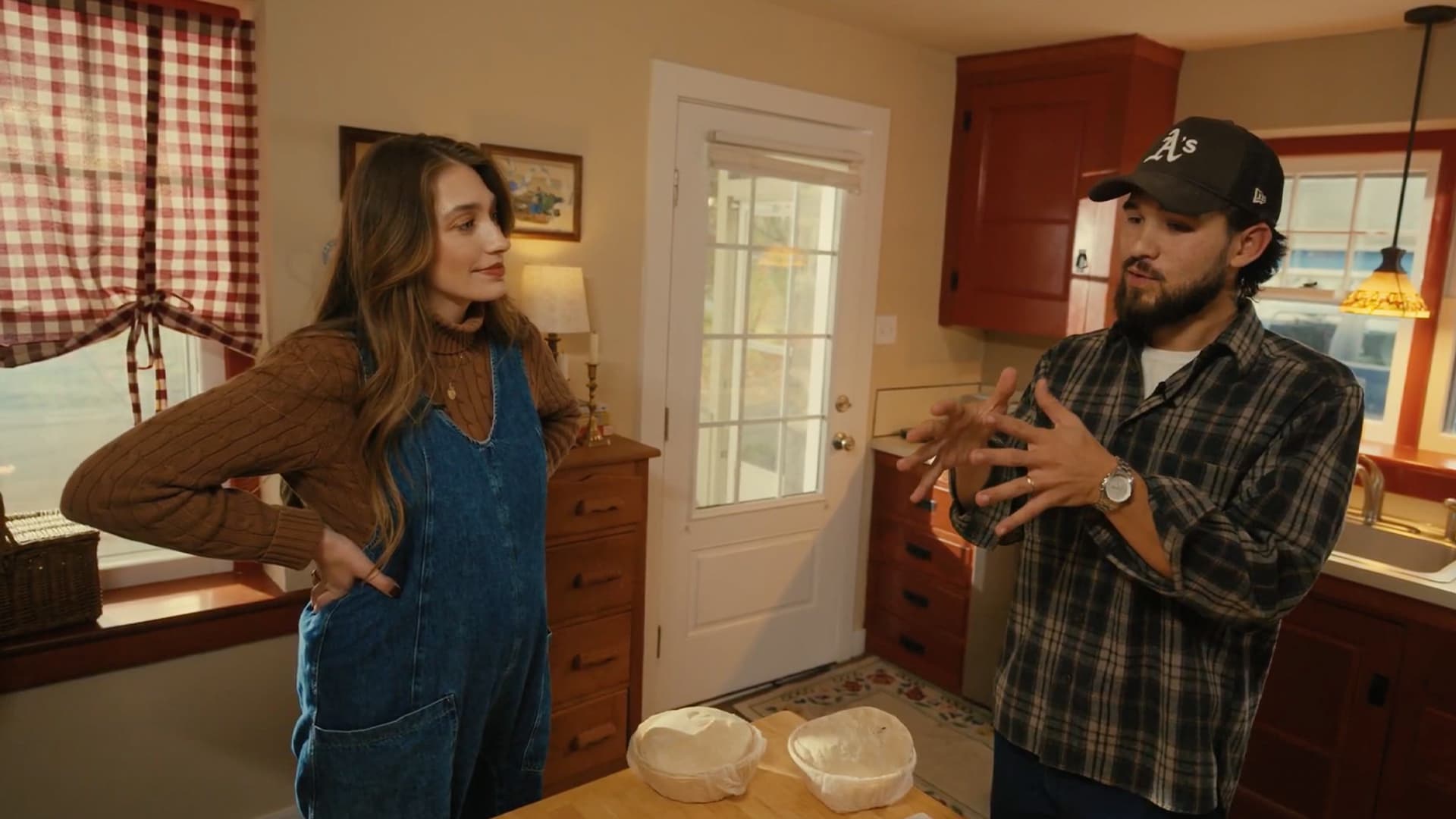
This farm is named Dahlia and Vine. I mean, is this your favorite plant? Like, what's the story behind this? Yeah, so dahlias are kind of what got me hooked onto farming. So, this was never meant to happen. Me and my husband are both physician assistants. We went to PA school, got engaged, and we're looking for a place to get married. And we found this farm. It was a llama farm. I have the craziest ideas, and Steve just goes along with them.
And I was like, well, why don't we just buy the farm and get married on it? We bought the farm, and I grew a couple dahlias for the wedding, just to have, like, in the background along the fence. And then my twin sister wanted to get married here on the farm the next year. So, I decided I was going to grow all the flowers for her wedding. Why not? And you were still a full-time PA? Still a full-time PA, working 24-hour shifts at the hospital.
My husband was doing overnights, and I just needed a change. I just needed a change, and I said, you know what, let's just dive headfirst into this and do it full-time. The eight dahlias have turned into about 3,500 dahlias. We've got four greenhouses now. I've got about six employees. It's been amazing. It's been a really cool journey.
All right, so let us go and cut some peonies. Okay. So, those guys are a crate in the spring, too, because we have to harvest them multiple times a day. So, we will grab a crate and we will head over this way. How many times are you talking a day? If it is sunny, maybe three or four times a day, every few hours. So, you just keep coming back? Yes. There is about 600 planted here, and then we have a field of about 300 on the other side.
Okay. And normally, it takes about five years before you can get a really good, big harvest off of them. This one actually looks perfect. So, you are going to come in, and you are going to squish it like a marshmallow, and if it feels like a slightly stale marshmallow, it is perfect. So, touching it like this doesn't hurt it or anything? And that's how we tell that they're ready.
It's a lot of work, but it all pays off in the end. And I'm seeing it. I mean, you really are a steward of the land. I mean, this is so much more than even just the plant. We like to think that we are taking care of the soil, and the soil, in return, is taking care of us by giving us gorgeous flowers.
Alright, so I think we got them all. This is not bad for a morning's harvest. Not bad. Not bad at all, I'd say. But yeah, so we will load them up, and we will get them straight into the cooler.
These flowers carry more than color. They hold the care of the hands that grew them, the stillness of the morning light, and the grace of a season well-tended. Do you flower arrange a lot? I mean, I dabble. You're a dabbler. I love it. Okay. I like to start with my greenery and my fillers. So, we're going to start with, let's actually pull up this Orlea. Okay. So, I'm going to pick up probably about three or four stems. Kind of got them like in a little X pattern.
Use your thumb as like a fulcrum almost, like that's your little, yep. All right, that's pretty good for filler. Okay, so we've got a little bit of filler right here. So, next we're going to go in with our greenery. Okay. So, you're just kind of like stacking them on top of each other. You can kind of like twist them around in your hand if you want to. Next, I like to fill in with my focal flowers at the start of the show.
So, we'll grab a peony, insert the stem exactly where you want it to go. So, we've got our gorgeous peony in the middle. Let's start filling in with a little bit more focal flowers, and you can just kind of like lay them, yeah, kind of like in an X-shaped pattern.
So, next let's add in a little bit of our spike flowers. Okay. And I just kind of use them like as the backbone of an arrangement. Add in a couple of these are really fun fillers just to kind of like dance above the arrangement a little bit. So, I'll actually go in and start pulling, and you just kind of loosen your grip. On those stems. And you see, like, if I loosen my grip, they're still staying in this, like, little spiral pattern.
Okay. And the beautiful thing about that is that there's no tension on any individual stem. That's looking like a pretty good bouquet to me. Each flower tells part of a story, and arranging them feels like giving shape to a feeling.
So then, what we're going to do, how I like to wrap my bouquets, I lay them just like this, so the flowers are kind of right underneath those two peaks, and then I take my paper, like I'm wrapping a burrito, I hold it up like this, kind of like you're cradling it, a little bit, push it down against the stems, give that a good staple, and then I'm going to come in here and fold the paper over. That's perfect. Yep. So, where are these going now?
So, we'll go ahead and we will stock these in our farm stand. It's open on the weekends. We stock it with all of our flowers. We have a couple local vendors that bring us goodies, gifts and goodies, so we'll stock these out for our customers to come and grab. Flourishing begins long before the first bloom. It starts in the soil, with faith, with patience, and with love.