The Ursuline Convent Riot
The Ursuline Convent Riot
NOTE: Enjoy this excerpt from The American Daily Reader, by CatholicVote president Brian Burch and Emily Stimpson Chapman. To order the complete volume, visit the CatholicVote store today!
Young women held against their will. Dungeons. Torture chambers. Sexual improprieties of every sort. In 1834, that was the average Bostonian’s opinion of the happenings inside Catholic convents.
It was wild fantasy, fueled by animosity toward the city’s growing Irish population. Yet fantasy and prejudice were enough to send an angry mob knocking on the door of the Ursuline Convent and School in Charlestown, Massachusetts, in August of that year.
The trouble had started days earlier, when a young sister left the convent but returned just hours later. Rumors about the sister quickly spread, and on August 10, 1834, placards appeared in Boston, calling upon the city’s men to “rescue” the woman.
By 8 p.m. the following evening, a mob had gathered outside the convent. When a sister appeared in the window, the mob demanded they release the “mysterious lady” imprisoned within. The sister told them to stop talking nonsense, then went back to her work. When the nonsense only grew louder, Mother Superior Mary St. George came outside. She explained that the sisters weren’t in the business of keeping prisoners and that all the noise was waking sleeping students.
She then added, perhaps imprudently, “The bishop has twenty thousand of the vilest Irishmen at his command, and you may read your riot act till your throats are sore, but you’ll not quell them.”
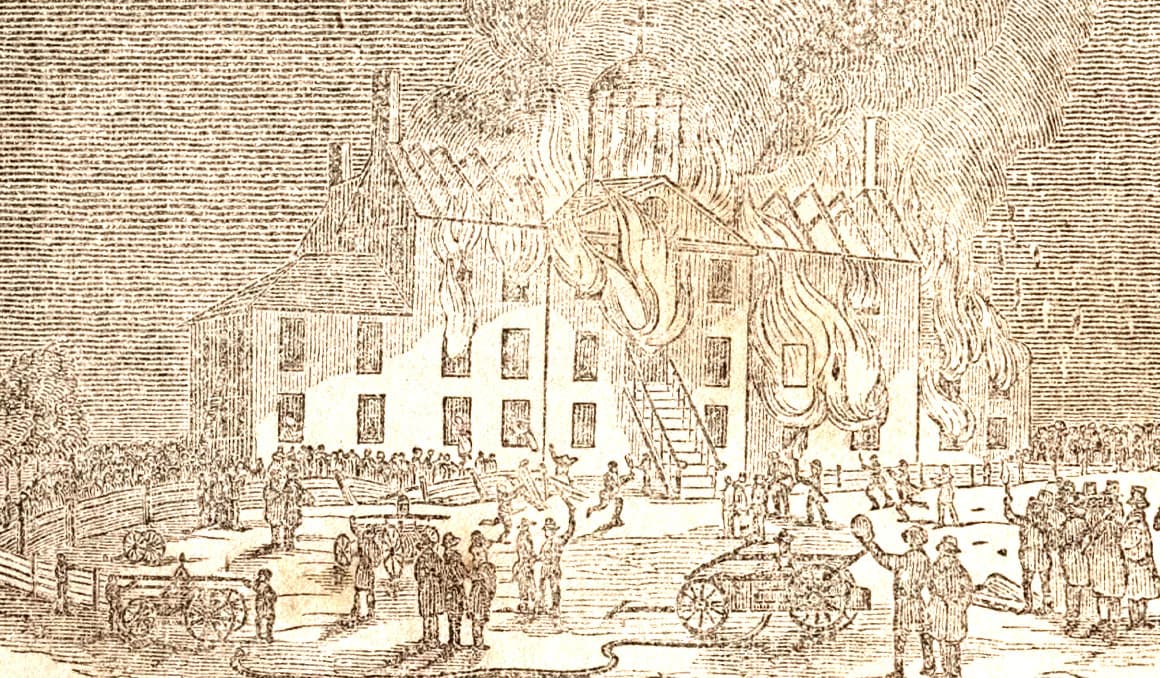
That did the trick…but only temporarily. The crowds dispersed, then reconvened at 11 p.m., this time with fire.
As the sisters and students snuck out the back, the fire company pulled up in front. Rather than help the sisters, though, they joined the rioters. By midnight, 2,000 people stood on the convent’s grounds. Within the hour, the convent was in ashes.
No recompense was ever made to the sisters or diocese, and of the 13 men arrested, all but one—a friendless boy—were acquitted. Soon afterwards, the ringleader of the riots placed an ad in the newspaper thanking greater Boston for the many kind gifts sent his way.