Archeological discovery dates Christianity’s arrival in Germany up to 100 years earlier than previously recorded
Archeological discovery dates Christianity’s arrival in Germany up to 100 years earlier than previously recorded

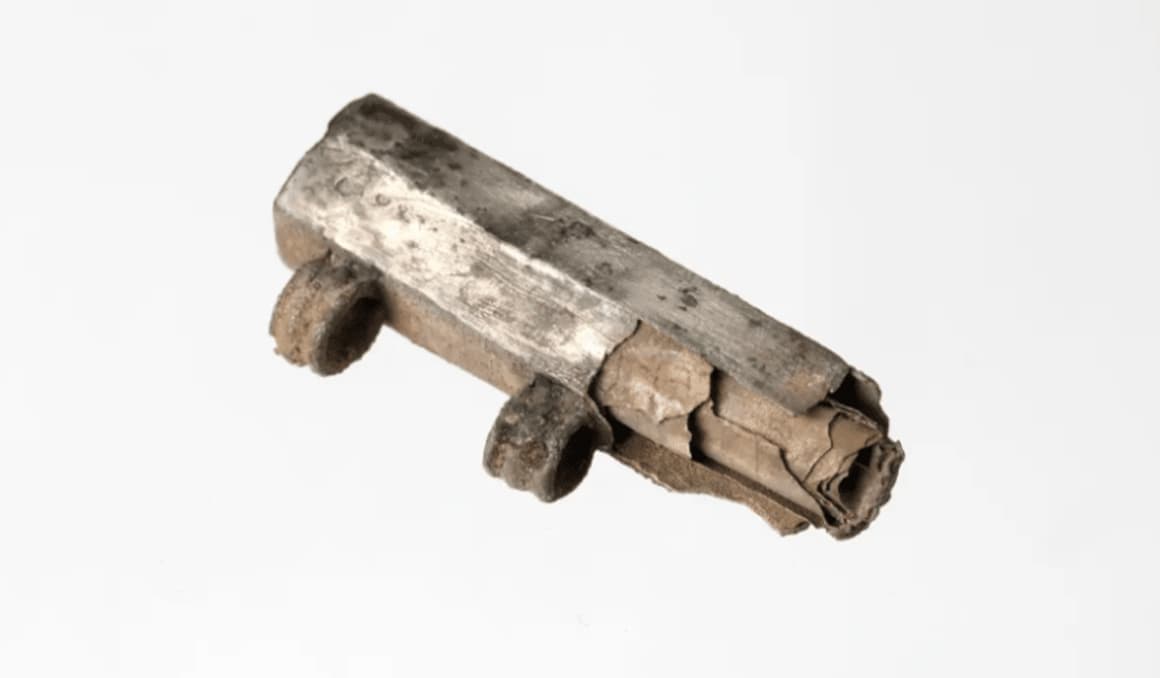
CV NEWS FEED // A silver amulet discovered in 2018 in an ancient German grave was announced Dec. 11 to have confirmed that Christians settled in the area in the early to mid-third century.
The Jerusalem Post reported that Christianity in the area was previously thought to have dated back to the fourth century, but the discovery and subsequent testing of the amulet changed the timeline by 50 to 100 years.
The amulet was found during excavations at a Roman cemetery in Frankfurt. Researchers found a small, rolled silver foil bearing 18 lines of Latin text, which they virtually read with the aid of a computed tomography scanner so as not to damage the roll. Translated, the inscriptions were found to be prayers to Jesus, which also included a mention of St. Titus, the “Holy, Holy, Holy” prayer said at Mass, and an almost exact quote of Philippians 2:10-11, the Jerusalem Post reported.
Researchers hypothesized that the man found with the amulet may have been a Christian martyr since Christians were often persecuted in the Roman Empire during the third century.
“Further scientific examinations of the bones are expected to provide insights into the man’s origin,” the Jerusalem Post reported.
The amulet also challenges pre-existing ideas about the ancient Roman city of Nida, which was located where present-day Frankfurt is now. Rather than being a small town near the borders of the Roman Empire, Nida is now thought to have been a diverse and culturally ethnic city.
According to Frankfurt’s Cultural and Science Department Head, Dr. Ina Hartwig, the “extraordinary find touches many areas of research and will occupy science for a long time.”