Narni: The City of Secrets
Visit a beautiful, fascinating, ancient hilltop city that sits upon a maze of underground passageways. And meet a gentleman who, as a boy, discovered something amazing while exploring the city’s depths.
Transcript
Read the full transcriptAuto-generated · 1,197 words
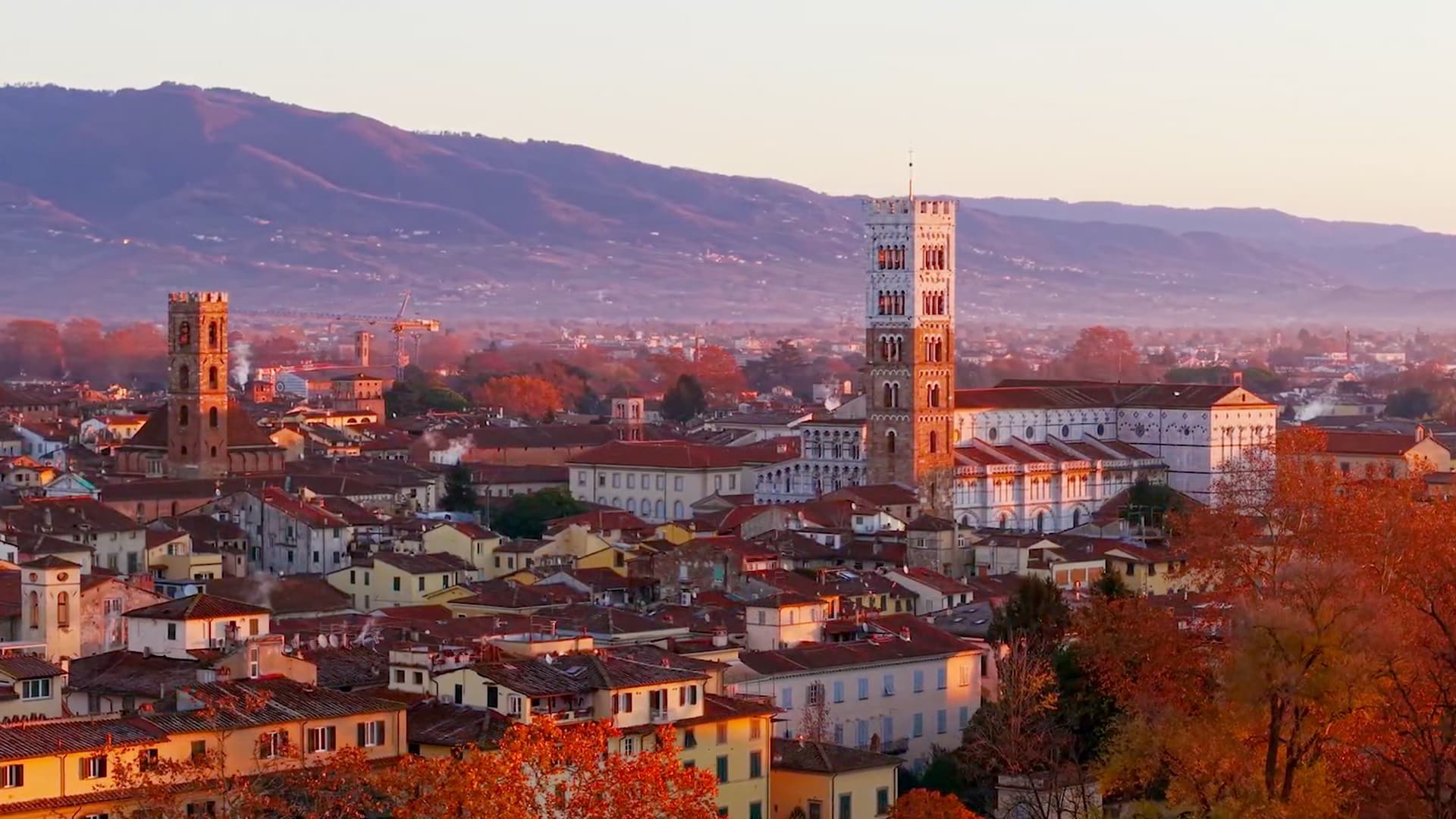
Welcome to the vibrant pulse of Italy, in Umbria, a land where millennia of history merge with nature that simply steals your breath away. Here, nestled within valleys that sculpt a predominantly limestone landscape, as if on a majestic natural stage, the proud city of Narni stands defiant.
Its location, its profound silence, its sheer magic have captivated minds. Legend whispers that C.S. Lewis himself found the spark for his immortal chronicles right here in Narni's ancient name. Towering around us, stone giants mark the passage of time, the impressive arches of the Augustus Aqueduct, which channeled vital water and the primal force of the nearby Marmore waterfalls.
Narni offers beauty above ground, but the true enigma, the most gripping chapter of this story, is found in the pitch black, where the living rock conceals secrets held tight for centuries. Now, leave the daylight behind. We're about to plunge into a place that is haunting, incredible, and utterly magical. We're about to step into the deep shadow of history.
Narni Soterrania. Underground Narni. Beneath Narni's main squares, ancient churches and modern homes, lies a sprawling labyrinth of tunnels and hidden chambers. A journey hurtling back in time, all the way to a sweltering afternoon in 1979, when a handful of curious teenagers kicked off a discovery that would forever rewrite the city's past.
To guide us through this underworld, we have the man who quite literally brought this forgotten world back into the light, Roberto Nini, archaeologist, guide, and, crucially, one of the original teenage discoverers of Narni Sotterranea. We go down, we meet an old man, he tells us about a treasure, he shows us a hole in the middle of the rubble of a convent, and he tells us, in my opinion, here behind there is this fabulous treasure. Here there was a Dominican convent, but it had been destroyed by the Second World War, abandoned a century before, so those who knew were no longer there.
The hole was really exactly here, where this door is. It was all the rubble that covered this passage up to this level. But for a speleologist, a passage like this is easy to overcome. So, we went inside and found something really fantastic.
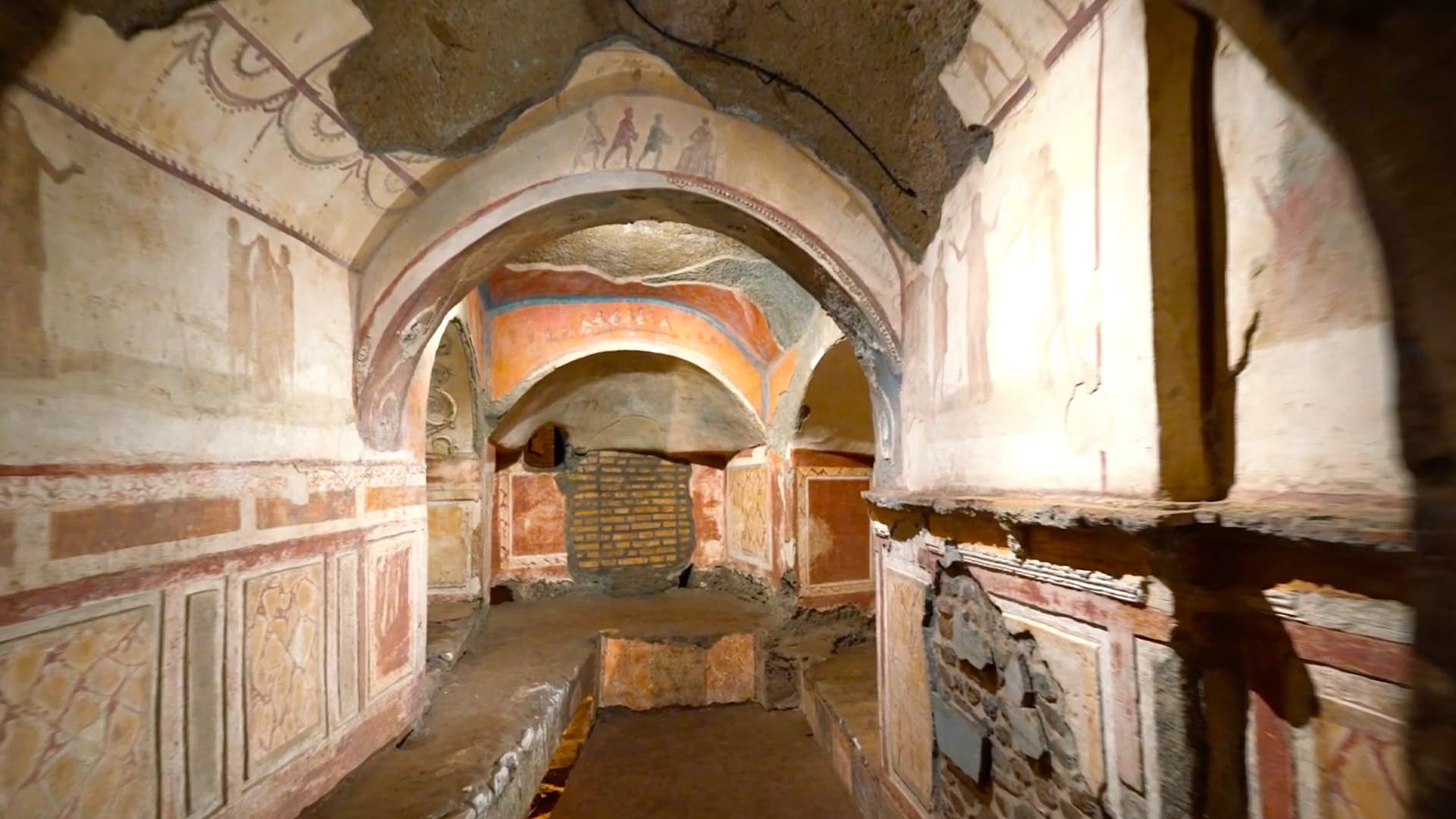
This church was a discovery, because we didn't think we would find something like this down here. It was completely covered in limestone, because the old man was walking on it every morning, and so it was completely in poor condition. But we saw one thing very well. It was the eyes of that angel here on the left, who looked at us as if to beg us to get out of here, because I can't take it anymore. And so we have been working hard in these years so that this church can return to what it is today.
It was consecrated in 2000. We didn't know who it was dedicated to, we thought it was dedicated to Mary, but instead we found a document that tells us that it was actually dedicated to Saint Michael the Archangel. In fact, this church was excavated in the rock, underground, hypogea. It is a follow-up of images that have completely remained here to testify something precious.
It seemed that the discovery ended up in the church, but instead we found a walled door, and now the wall is gone. So we stopped, but curious, we asked that old man if he had known any other passage. He showed us this warehouse full of dirt up to this level, there were various tools in the garden. This door was the wall of Ammattoli. Obviously, as curious and as speleologists, a walled door can hide anything, so... We asked our neighbors at home if we could make a hole to explore it.
They obviously said no, and so we came at night, during the paleo, during the ring race, while everyone was going to see the historical court, we were the only ones to make this hole. But this door had been walled on purpose, because the Dominicans, running after the Unità d'Italia, had wanted to seal a piece of their history that they did not want to be known. Below there was the Inquisition. We have told it to everyone, but of course, nobody believes it to a group of kids.
And instead, entering at night, inside a hallway with very little light, the dust rising, the terror of the neighbors coming back home, and then ending up in an unknown room, a big one, a room that didn't keep anything, there were just rubble. We couldn't have thought that there was an inquisition down here. We only understood it when we entered this little door, where a word written on the wall was SANTO UFFIZIO. Now let's go in.
This cell is something unique. There is nothing like this in the world. Here we don't just have signs on the wall, we even have the souls of the people who were here. These people who didn't want to be forgotten. Think about it, among these, there is one in particular who left his mark, his name. On the 4th of December 1759, he was locked up in here, and he left this sort of testament. His name was Giuseppe Andrea Lombardini. He began a slow search that led us in 2008 to find his identity.
In the Vatican archives his story came out. He was not just any person, he was a chief of the guards of the inquisition of Spoleto, but above all he was linked to the Freemasonry and for this reason he was hidden down here.
This is the story Narni concealed for centuries and that we were lucky enough to bring to light. The story of Narni Sotterranea, of Roberto Nini and his friends, is a powerful reminder. The past never truly sleeps. It is only waiting to be awakened.
But Narni lives vibrantly above ground too, its heart beating with ancient passionate traditions. Every year, this passion culminates in the Corsa al Anello, the Race of the Ring. This dramatic historical event pits the knights of the three city districts, Mezzule, Frapporta and Santa Maria, against each other in a breathtaking equestrian competition.
Riders gallop along a historic route, aiming to thread their lance through a suspended ring. It's an adrenaline-fuelled spectacle, celebrating the patron saint, Juvenal, an ancient tradition with roots stretching back to 1371, that reignites the fierce medieval rivalries. Leading up to the main event, the city's districts throw open their doors with magnificent medieval recreations.
Tourists and citizens alike are invited into a total immersion in another era, every detail meticulously researched. Visitors can wander through the exotic fragrances of Speziario, the apothecary, where herbs and spices are prepared and ground using period recipes. They can tour a faithful medieval hospital, seeing the tools and rudimentary healing methods of the time.
And even witness the intricate craft of a candle workshop, where wax and tallow are worked by hand to create the only light source for the medieval night. It's the chance to live, not just observe, the enduring tradition and deep passion of Narni's people.