Popes, Mariology, and the history of the Marian title ‘Mediatrix of All Graces’
The Catholic Church has a rich history of mariology, Marian devotion, and tradition honoring the Mother of God, who is known by many titles across cultures and times. One of the oldest and most debated Marian titles is “Mediatrix of All Graces,” a title that drew renewed attention in late 2025 after a Vatican document urged exercising prudence when using it.

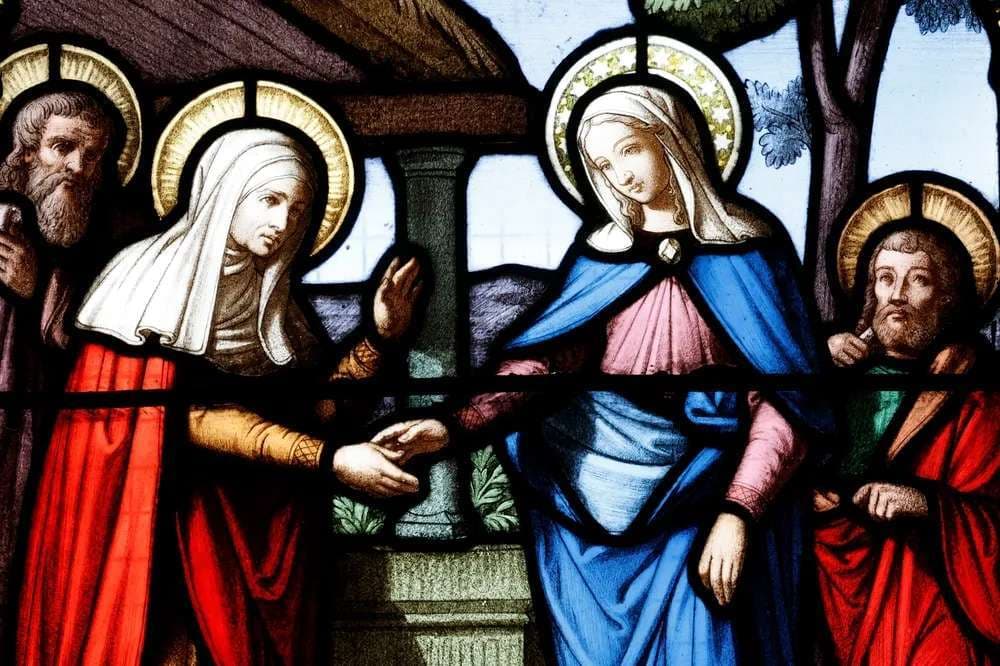
The Catholic Church has a rich history of mariology, Marian devotion, and tradition honoring the Mother of God, who is known by many titles across cultures and times. One of the oldest and most debated Marian titles is “Mediatrix of All Graces,” a title that drew renewed attention in late 2025 after a Vatican document urged exercising prudence when using it.
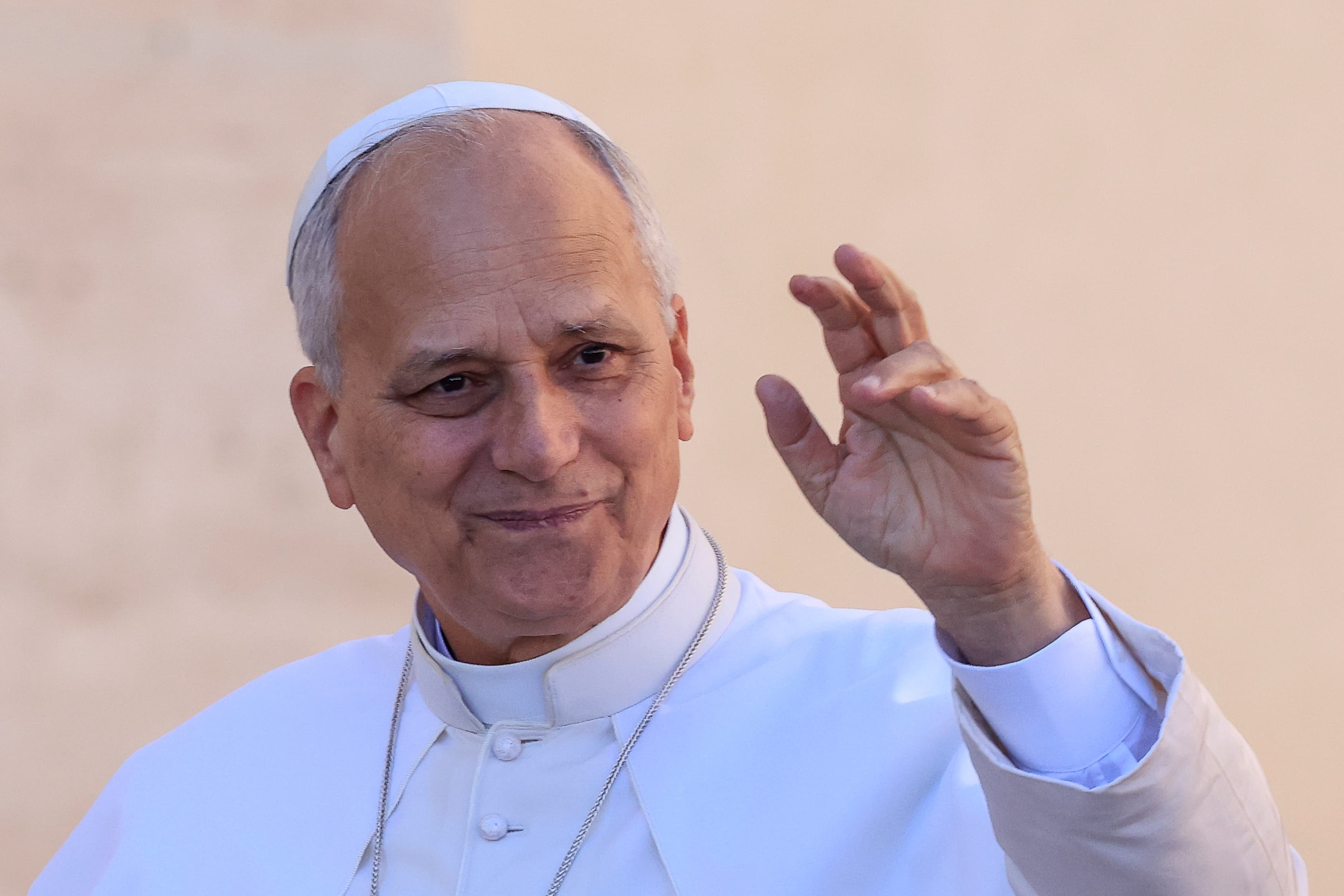
Pope Leo XIV brought the title up again briefly in a public address he gave this month, which the Catholic Church dedicates to the Blessed Virgin Mary.
Here’s a look at the theology and history of the title, which dates back to the earliest centuries of the Church.
One of the earliest known uses of the term “Mediatrix” is credited to St. Ephrem the Syrian, a fourth-century writer and Doctor of the Church. According to the New Daily Compass, an Italian Catholic news outlet, St. Ephrem composed hymns and wrote biblical commentaries and poetry.
“His work was particularly rich and inspired when it came to singing the praises of Mary, exalted by him in her divine motherhood and as ‘our mediatrix’ to her Son,” the publication states. “He knew by tradition, or intuited, what other saints and mystics have confirmed and that is that ‘Mary, as she was present at the first miracle, so had the first fruits of the resurrection from the underworld,’ seeing the Risen Jesus first.”
The theology behind the title
Mother of All Peoples, an international lay organization that spreads devotion and knowledge of Our Lady, published an excerpt from a book on Our Lady by Mariologist Mark Miravalle that further explains the term and its history. He argues that Mary’s God-given ability to distribute graces “is an essential element” of her role as Spiritual Mother.
“Mary uniquely participated in the acquisition of the graces of Redemption by Jesus Christ (objective redemption) and, therefore, the Mother of Jesus, above all creatures, fittingly participates in the distribution of these graces of Redemption to the human family (theologically called subjective redemption),” he writes. “By distributing sanctifying grace, Mary is able to fulfill her role as Spiritual Mother, since she spiritually nourishes the faithful of Christ’s body in the order of grace.”
Miravalle argues that Mary’s role as “Mediatrix” is confirmed in the New Testament, particularly in the Gospels of Luke and John. Through her free and active cooperation in the Incarnation, he writes, citing the Annunciation, Mary “mediates to us Jesus Christ, who is himself the Source and the Author of all sanctifying grace.” He also points to the Visitation, where Mary physically mediates the meeting of Jesus and John before they were born and the Wedding Feast at Cana, where she brings the newly wed couple’s needs to Jesus.
Mary’s mediation “directly leads to an extraordinary release of grace: Jesus’ first public miracle and the beginning of the public ministry of the Christ, a ministry that will end in Calvary and the acquisition of all redemptive graces,” Miravelle said.
A number of popes, saints (including St. Ephrem), and others in the centuries that followed supported the title of “Mediatrix,” according to Miravalle, who writes that a number of private revelations — which the Church does not require the faithful to believe — also provide images of Our Lady as Mediatrix. He cited the 1830 Miraculous Medal apparitions, the 1854 Lourdes apparition, the 1917 Fatima apparitions, among “several other contemporary Marian apparitions.”
“All portray Mary as distributing the graces of God from the opened palms of her immaculate hands,” he writes.
“Although not in the realm of public revelation, authentic Marian private revelation seems to confirm symbolically the possibility of Mary’s physical distribution of graces,” he adds.
There were alleged Marian apparitions in Lipa, the Philippines, in 1948, when 21-year-old Carmelite Sister Teresita said she was having visions of Mary. On the last day of the alleged apparition, Mary had allegedly identified herself as “Mary, Mediatrix of All Grace.” However, though initially approved by the local bishop in 1951, the alleged apparitions were reportedly deemed later that year by the Vatican as non-supernatural, according to a 2024 Philippine Daily Inquirer report.
A bishop reopened the case of the apparitions in 1991, permitting the local faithful to resume the devotion, according to the report. In 2015, the then-archbishop of Lipa Archbishop Ramon Arguelles “declared the apparitions supernatural and worthy of belief,” but this declaration was overruled by the Vatican. However, in 2016 the Vatican reemphasized its ultimate determination of the apparitions as non-supernatural, but permitted the local faithful to continue the devotion.
Vatican considers approving the title in 20th century
According to Catholic World Report (CWR), a number of popes, including Pope Leo XII, between 1748 and 1904 supported the title, though it was never a defined dogma. Calls for defining it dogmatically were championed by Cardinal Désiré-Joseph Mercier, archbishop of Belgium, who lived from 1851 to 1926. He spent the last 20 years of his life working in favor of the dogma, organizing four petitions to Rome requesting it.
The Vatican tasked Dominican Father Alberto Lepidi, the Master of the Sacred Palace and consultor to the Holy Office, with reviewing the petitions and submitting a judgement on them, according to CWR. He ultimately opposed the title, saying it was “only a contrivance of the mind, lacking a solid theology,” and the Holy Office decided against the petitions.
Cardinal Mercier turned his efforts to having a feast day for Mary, Mediatrix of All Graces, which Pope Benedict XV approved in 1921 to all Belgium dioceses and any bishops and religious communities that requested to celebrate the feast, which originally was May 31. Pope John XXIII approved a 1962 liturgical calendar that moved the feast to May 8. CWR notes that it is still an optional feast for Catholic communities following the 1962 calendar.
After Benedict XV’s death in 1922, Cardinal Mercier petitioned the papal successor Pope Pius XI to establish a papal commission to see whether the title could be defined. Pope Pius XIV personally supported the title, but decided to not make the definition per the advice of a special ad hoc commission of the Holy Office that reviewed the commissions’ summary reports — which CWR states “manifest support for the definability of the proposed dogma.” Despite ultimately deciding to not define it, CWR notes that Pope Pius XI refers to Mary as “the Mediatrix of all graces” in his 1932 encyclical Caritate Christi Compulsi, and several popes after him have used the title on numerous occasions.
Pope Leo XIV and the Vatican Dicastery for the Doctrine of the Faith
In November 2025, the Vatican Dicastery for the Doctrine of the Faith (DDF) issued a doctrinal note on this topic regarding titles long used to describe her role in Redemption, saying that the title “Co-redemptrix” — a term dating back to the 15th century — is not appropriate to explain her cooperation. The note also advised being particularly prudent when using the title “Mediatrix of All Graces,” saying it has limitations. In the section on the “Mediatrix” title, the note states in the strictest sense, “we cannot talk of any other mediation in grace apart from that of the incarnate Son of God.”
“Therefore,” it continues, “we must always recall, and never obscure, the Christian conviction that ‘must be firmly believed as a constant element of the Church’s faith’ regarding ‘the truth of Jesus Christ, Son of God, Lord and only Savior, who through the event of his incarnation, death, and resurrection has brought the history of salvation to fulfillment, and which has in him its fullness and center.’”
The note sparked concern from a number of theologians and laity, who appreciate the titles from a place of devotion to Mary. An appeal penned in December 2025 by Father Serafino Lanzetta, an Italian Mariologist and priest, outlines numerous saints, Doctors of the Church, and popes who supported these titles, and pointed out that Lumen Gentium “substantially” reflects this Mariology.
Though the DDF has not weighed in on the title since, Pope Leo brought up the title during his May 13 Wednesday Audience, in which he reflected on while the chapter of Lumen Gentium dedicated to Mary.
“The Council has left us a clear teaching on the unique place reserved to the Virgin Mary in the work of Redemption,” Pope Leo said, citing the constitution’s paragraphs 60-62. “It recalls that the sole Mediator of salvation is Jesus Christ, and that his Mother Most Holy ‘in no way impedes, but rather fosters the immediate union of the faithful with Christ’.”
“At the same time, ‘predestined from eternity by that decree of divine providence which determined the incarnation of the Word to be the Mother of God, the Blessed Virgin … in this singular way … cooperated by Her obedience, faith, hope and burning charity in the work of the Saviour in giving back supernatural life to souls. Wherefore She is our mother in the order of grace,’” he added, quoting paragraph 61.
The Pontiff did not elaborate further on the text or title, but his remarks leave room to consider paragraph 62 of Lumen Gentium, which clarifies that the title “Mediatrix” should not be understood as conflicting with Christ as the one Mediator.
“This maternity of Mary in the order of grace began with the consent which she gave in faith at the Annunciation and which she sustained without wavering beneath the cross, and lasts until the eternal fulfillment of all the elect,” the constitution states. “Taken up to heaven she did not lay aside this salvific duty, but by her constant intercession continued to bring us the gifts of eternal salvation.
“By her maternal charity, she cares for the brethren of her Son, who still journey on earth surrounded by dangers and cultics, until they are led into the happiness of their true home. Therefore the Blessed Virgin is invoked by the Church under the titles of Advocate, Auxiliatrix, Adjutrix, and Mediatrix. This, however, is to be so understood that it neither takes away from nor adds anything to the dignity and efficaciousness of Christ the one Mediator.”
Whether the Vatican offers further clarification remains to be seen. In the meantime, the Church’s rich history and theology offers Catholics an expansive treasury of opportunities to deepen their devotion to Christ’s mother, who desires to bring all people to her Son.