Art historian highlights ‘Advent wreath’ of paintings as Christmas approaches
Catholic art historian Elizabeth Lev this week discussed four paintings that she says can help people get into the spirit of Advent.
Catholic art historian Elizabeth Lev this week discussed four paintings that she says can help people get into the spirit of Advent.
“It is in Advent, and its sense of anticipation, where art shines,” Lev wrote in her Dec. 9 essay for Angelus News. “If the images we admire hint at the greatness they represent, they create a longing for a true encounter with Christ, the same longing as we await his birth.”
The first image she discusses is a painting of the pregnant Blessed Virgin Mary. Dating from around 1460, “Madonna del Parto” by Piero della Francesca has been particularly reverenced by expectant mothers over the centuries. She said this image of Our Lady provides an example of the kind of prayerful calm that should characterize the season of Advent.
The second painting is titled “Census at Bethlehem” by Pieter Brueghel the Elder and was completed in 1566. Inspired by the census in chapter 2 of the Book of Luke, Lev wrote that the work of art captures “worldly chaos,” including dozens of figures doing everything from skating and throwing snowballs to bringing pigs to be slaughtered.
“This painting, made for a domestic setting, was meant to dazzle and delight, allowing the viewer to continually notice something new,” Lev wrote. “But through the waves of activity in the center foreground, a quiet figure in blue forms a visual anchor amid the commotion. It is Mary, heavily pregnant, seated on a donkey led by Joseph; both are going to the census booth.”
Ultimately, Lev says that this busy painting can help the faithful to remember to stay focused on Christ during a time when it’s easy to be caught up in preparations for Christmas celebrations.
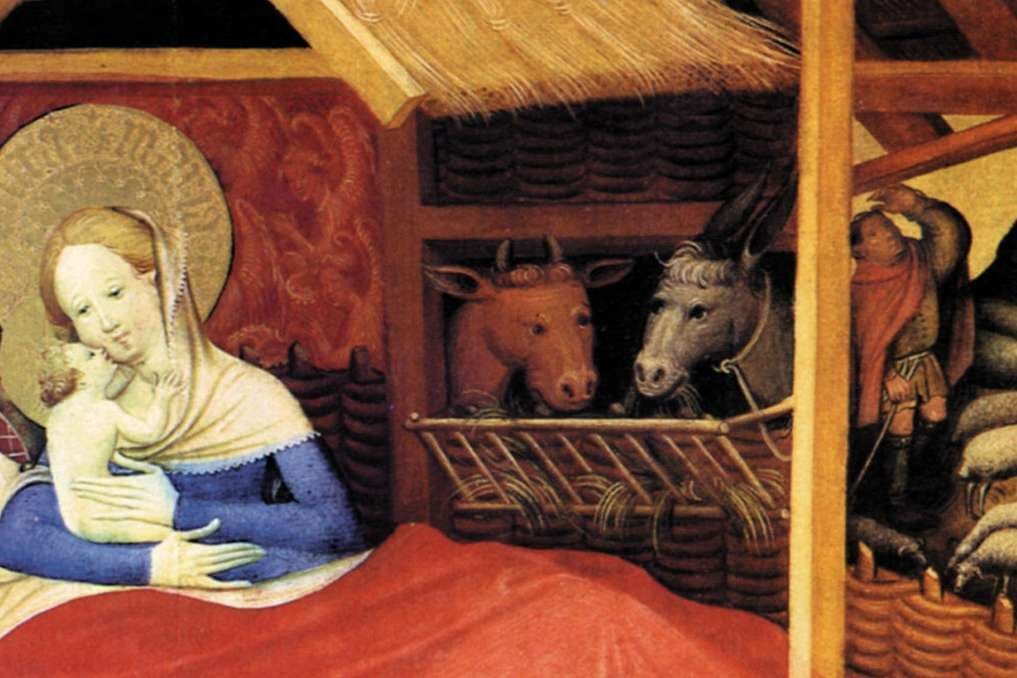
Lev writes that the third work, “Nativity” by Conrad von Soest, “might seem silly, or even disrespectful,” but she encourages people to look at this image a bit more closely.
“Nativity” depicts the Holy Family in front of a stable full of animals that Lev compares to characters in a children’s cartoon. Mary sits up in bed, perfectly poised as she stares into the Christ child’s eyes, but St. Joseph cuts a very different figure.
“If Mary’s pose is drawn from monumental statues, Joseph’s seems inspired by farce,” Lev wrote. Hunched over a fire, his cheeks puffed, he is trying to multitask by cooking breakfast and heating the room. The wooden bench, bowl, and spoon are reminders of his work: sturdy but unglamorous.”
Lev, who has previously published a book about St. Joseph’s depiction in art, says that in this painting the humble carpenter serves as a bridge for the viewers to enter into the sacred scene.
“Joseph helps us contemplate Christ’s humanity as he does what he can to participate in this great mystery,” Lev wrote. “During Advent, Joseph is a model for us, to humbly offer what we can to prepare the way for the Lord.”
The final work Lev discusses is a painting from the Renaissance, “Seeing Shepherds” by Daniel Bonnell. Lev says that “Seeing Shepherds” expresses the intense emotion inspired by the “joyous mystery” of Christmas.
“The energetic brushstrokes add a kinetic energy to the broad wings carrying the lithe forms and the canvas is overwhelmed with the spirit of rejoicing,” she writes.
The painting depicts the star of Bethlehem and a multitude of angels from the perspective of the shepherds, and Lev calls it “a tsunami of color.” Ultimately, she indicates that the work poses a simple question to its viewers: “How can we, alongside the humble shepherds who are privy to this display, not join our fellow believers and bask in the rapturous beauty of Christmas?”